
Choose a coordination task with clear boundaries
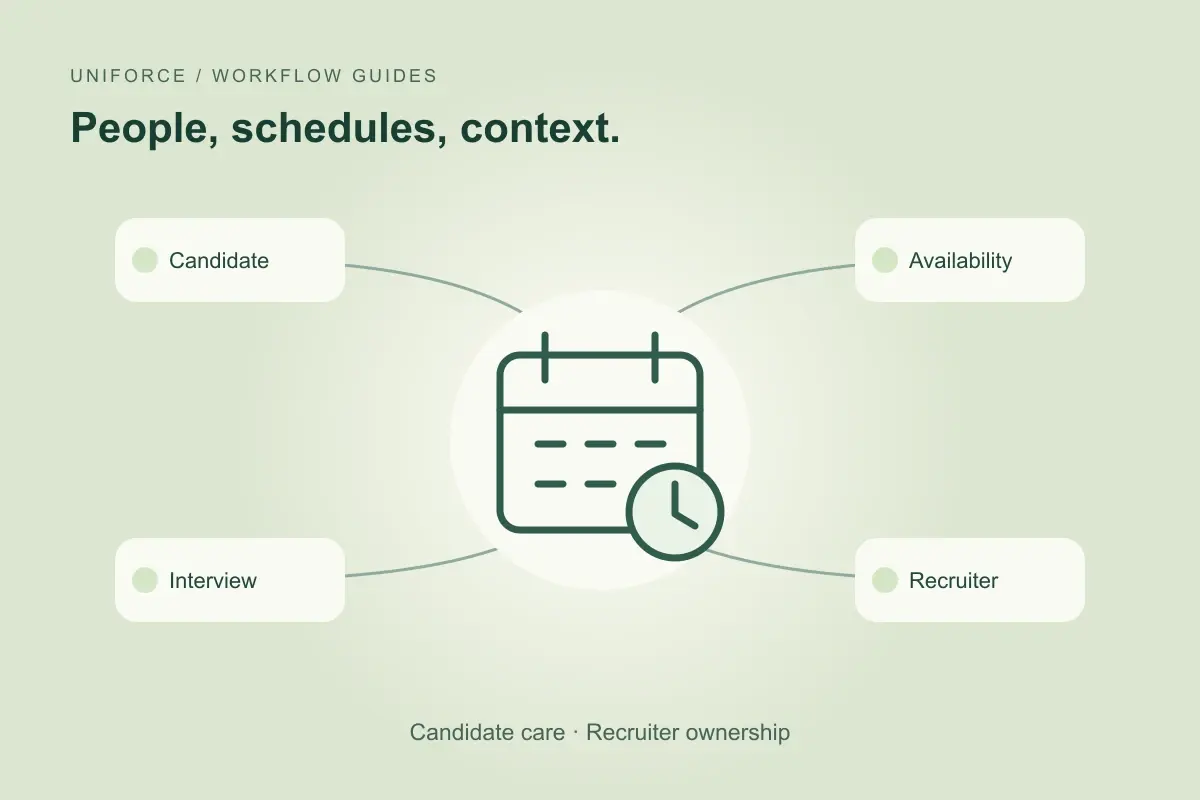
Interview scheduling is a practical workflow to examine because the required outcome is observable: the candidate and interviewers receive the right confirmed details. Define which roles, stages and calendars are included, along with the recruiter who owns exceptions.
Keep this scope distinct from deciding who deserves an interview. The role may organize submitted information or prepare a missing-document request, but it should not infer suitability from unrelated personal details. The recruiter remains accountable for the judgments in the hiring process.
Maintain the candidate’s actual context
A candidate may reply in an email thread after speaking with another recruiter. Use the agreed record-matching process and retain the relevant scheduling preference, job reference and prior commitment. If the identity or application is ambiguous, ask for clarification before attaching the conversation to a record.
Limit access to the records needed for the task. A coordinator usually needs availability and the interview stage, not every internal assessment. Separate candidate-facing information from notes intended for the hiring team, and define who can update each type of record.
Confirm the appointment rather than assume it
Time zones, interviewer availability and last-minute changes can turn a simple invitation into repeated coordination. Prepare options using the configured calendar connection and check the time zone explicitly. A proposed slot should remain tentative until the required participants have confirmed it.
If an invitation fails or availability changes, preserve the case and notify the scheduling owner. Do not mark an interview as confirmed just because a draft invitation exists. Keep one current reference so retries or rescheduling do not create conflicting appointments.
Make the recruiter handoff actionable
The recruiter should receive the current stage, confirmed appointment or unresolved question, and the action needed. A candidate asking about compensation, accommodations or an exception may require a person. The customer-facing language should explain the next step without promising a decision that has not been made.
Test a declined slot, a duplicate application, an unavailable interviewer and a candidate asking for a person. Compare correctly confirmed meetings, repeated questions, rescheduling errors and review effort. Expand only after the team understands the failure paths and can correct the workflow without losing the candidate’s context.
Human oversight for recruiting workflowsHire a digital employee for a defined role
Common questions
Does this workflow decide which candidates to hire?
No. This example covers coordination and information handling. Candidate evaluation and hiring decisions remain with the responsible people.
Can it communicate directly with candidates?
If the communication channel, approved messages and permissions are configured for that purpose. Uncertain or sensitive requests should reach the recruiter.
What should the team test before launch?
Time-zone differences, booking failures, duplicate records, rescheduling, missing information and requests for human help. Confirm that each exception has an owner.
About this guide
Prepared by the Uniforce editorial team. Examples illustrate proposed workflows, not customer results. The role’s access, actions and review requirements depend on the configured implementation.